

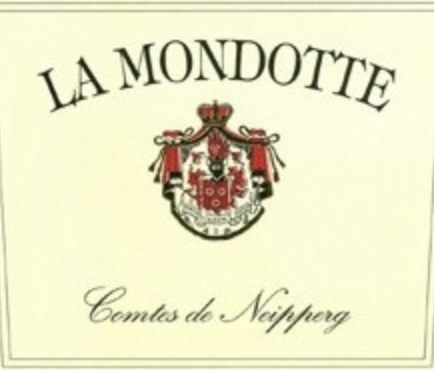
1998 Chateau La Mondotte
The 1998 Château La Mondotte is a powerful yet refined Right Bank Bordeaux from Saint-Émilion, produced by Château La Mondotte, a tiny, elite estate owned by Stephan von Neipperg and part of his family’s portfolio that also includes Château Canon-la-Gaffelière. The vineyard covers only about 4.5 hectares on a high limestone plateau with clay soils, a terroir known for producing intensely concentrated wines with strong structure and aging potential. The estate rose to global fame in the late 1990s after receiving critical acclaim for its richly textured, modern style, becoming one of the so-called “garage wines” that helped redefine Saint-Émilion’s reputation for small-production luxury bottlings. Typically a blend dominated by Merlot with a significant portion of Cabernet Franc, the 1998 vintage shows dense dark fruit, espresso, truffle, and mineral notes with firm yet polished tannins, illustrating both the power of the vintage and the château’s signature style of depth, precision, and longevity.
- $299.99
- $95.00
1998 Chateau La Mondotte
The 1998 Château La Mondotte is a powerful yet refined Right Bank Bordeaux from Saint-Émilion, produced by Château La Mondotte, a tiny, elite estate owned by Stephan von Neipperg and part of his family’s portfolio that also includes Château Canon-la-Gaffelière. The vineyard covers only about 4.5 hectares on a high limestone plateau with clay soils, a terroir known for producing intensely concentrated wines with strong structure and aging potential. The estate rose to global fame in the late 1990s after receiving critical acclaim for its richly textured, modern style, becoming one of the so-called “garage wines” that helped redefine Saint-Émilion’s reputation for small-production luxury bottlings. Typically a blend dominated by Merlot with a significant portion of Cabernet Franc, the 1998 vintage shows dense dark fruit, espresso, truffle, and mineral notes with firm yet polished tannins, illustrating both the power of the vintage and the château’s signature style of depth, precision, and longevity.
$299.99
- 750 ML
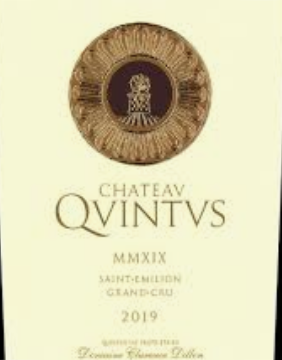
2019 Chateau Quintus
The 2019 Château Quintus is a polished Right Bank Bordeaux from the limestone plateau of Saint‑Émilion, produced by Château Quintus, a modern estate established in 2011 when the Dillon family—owners of Château Haut‑Brion and Château La Mission Haut‑Brion—acquired and merged historic vineyards on the site. Named after the Roman tradition of giving a fifth child the name Quintus, the estate represents the family’s fifth wine property and reflects their philosophy of precision viticulture and refined winemaking. The 2019 vintage is typically a Merlot-dominant blend supported by Cabernet Franc, grown on clay-limestone soils that lend structure and mineral freshness. In style it is rich yet elegant, offering layers of dark fruit, violet, cocoa, and subtle spice with fine tannins and long aging potential, illustrating both the pedigree of its ownership and the modern refinement of contemporary Saint-Émilion wines.
- $129.99
- $90.00
2019 Chateau Quintus
The 2019 Château Quintus is a polished Right Bank Bordeaux from the limestone plateau of Saint‑Émilion, produced by Château Quintus, a modern estate established in 2011 when the Dillon family—owners of Château Haut‑Brion and Château La Mission Haut‑Brion—acquired and merged historic vineyards on the site. Named after the Roman tradition of giving a fifth child the name Quintus, the estate represents the family’s fifth wine property and reflects their philosophy of precision viticulture and refined winemaking. The 2019 vintage is typically a Merlot-dominant blend supported by Cabernet Franc, grown on clay-limestone soils that lend structure and mineral freshness. In style it is rich yet elegant, offering layers of dark fruit, violet, cocoa, and subtle spice with fine tannins and long aging potential, illustrating both the pedigree of its ownership and the modern refinement of contemporary Saint-Émilion wines.
$129.99
- 750 ML
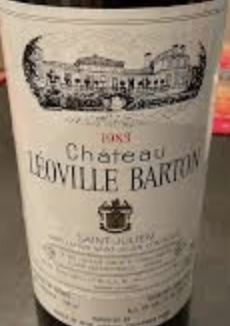
1983 Chateau Leoville Barton
The 1983 Château Léoville Barton is a classic Saint-Julien Bordeaux from an estate founded over three centuries ago and still run by the Barton family, now in its tenth generation, with vineyards overlooking the Gironde River. The property is known for traditional viticulture, including plowing rows and avoiding herbicides, and its gravel-and-clay soils help produce structured, age-worthy wines. The vineyard plantings are typically about 74% Cabernet Sauvignon, 23% Merlot, and 3% Cabernet Franc, giving the blend its hallmark balance of power and elegance. In tastings, the 1983 vintage has been praised for subtlety and finesse, showing complex notes of tobacco, plum, and berries with a silky yet full-bodied texture—an excellent example of mature Left Bank Bordeaux.
- $249.99
- $155.00
1983 Chateau Leoville Barton
The 1983 Château Léoville Barton is a classic Saint-Julien Bordeaux from an estate founded over three centuries ago and still run by the Barton family, now in its tenth generation, with vineyards overlooking the Gironde River. The property is known for traditional viticulture, including plowing rows and avoiding herbicides, and its gravel-and-clay soils help produce structured, age-worthy wines. The vineyard plantings are typically about 74% Cabernet Sauvignon, 23% Merlot, and 3% Cabernet Franc, giving the blend its hallmark balance of power and elegance. In tastings, the 1983 vintage has been praised for subtlety and finesse, showing complex notes of tobacco, plum, and berries with a silky yet full-bodied texture—an excellent example of mature Left Bank Bordeaux.
$249.99
- 750 ML
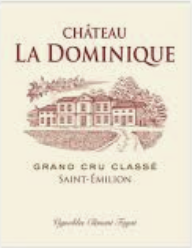
1986 Chateau La Dominique
The 1986 Château La Dominique is a structured and age-worthy Saint-Émilion Grand Cru Classé from an estate with roots dating back to the 16th century, situated on prime clay and gravel soils bordering Pomerol, adjacent to celebrated neighbors such as Château Cheval Blanc and Château Figeac. Owned for many years by the Fayat family, La Dominique has long been recognized for producing wines that balance Right Bank richness with notable backbone and aging potential. The 1986 vintage in Bordeaux was marked by a warm summer followed by a dry September, resulting in thick-skinned grapes with firm tannins and excellent structure—particularly favorable for Cabernet varieties. The blend typically centers on Merlot (around 70–80%), supported by Cabernet Franc and a meaningful portion of Cabernet Sauvignon, which contributes to the wine’s firm framework and longevity. Aged in French oak barrels, the 1986 La Dominique displays classic notes of blackcurrant, plum, cedar, tobacco, and earthy spice, with a muscular tannic profile that has softened gracefully over decades. While often overshadowed by the more opulent 1982 vintage, 1986 is revered by traditionalists for its power and classicism, and La Dominique’s proximity to Pomerol lends it a subtle richness that complements the vintage’s hallmark structure, making it a compelling and historically significant expression of mature Right Bank Bordeaux.
- $199.99
- $95.41
1986 Chateau La Dominique
The 1986 Château La Dominique is a structured and age-worthy Saint-Émilion Grand Cru Classé from an estate with roots dating back to the 16th century, situated on prime clay and gravel soils bordering Pomerol, adjacent to celebrated neighbors such as Château Cheval Blanc and Château Figeac. Owned for many years by the Fayat family, La Dominique has long been recognized for producing wines that balance Right Bank richness with notable backbone and aging potential. The 1986 vintage in Bordeaux was marked by a warm summer followed by a dry September, resulting in thick-skinned grapes with firm tannins and excellent structure—particularly favorable for Cabernet varieties. The blend typically centers on Merlot (around 70–80%), supported by Cabernet Franc and a meaningful portion of Cabernet Sauvignon, which contributes to the wine’s firm framework and longevity. Aged in French oak barrels, the 1986 La Dominique displays classic notes of blackcurrant, plum, cedar, tobacco, and earthy spice, with a muscular tannic profile that has softened gracefully over decades. While often overshadowed by the more opulent 1982 vintage, 1986 is revered by traditionalists for its power and classicism, and La Dominique’s proximity to Pomerol lends it a subtle richness that complements the vintage’s hallmark structure, making it a compelling and historically significant expression of mature Right Bank Bordeaux.
$199.99
- 750 ML
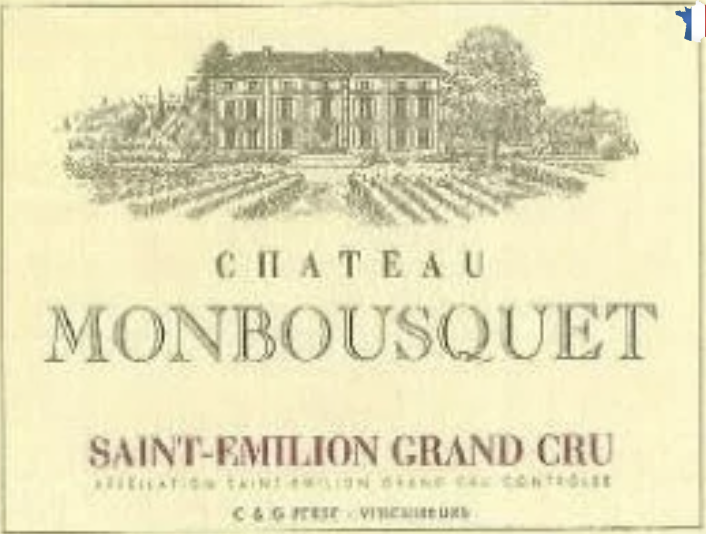
2000 Chateau Monbousquet
he 2000 Château Monbousquet is a bold and modern expression of Saint-Émilion from an estate whose history dates back to the 16th century, though it rose to international prominence after Gérard Perse purchased and revitalized the property in 1993. Located on the limestone and clay slopes near the border of Pomerol, Monbousquet was elevated to Grand Cru Classé status in 2006, reflecting the dramatic improvements in quality under Perse’s direction. The celebrated 2000 vintage—widely regarded as one of Bordeaux’s finest at the turn of the millennium—benefited from ideal growing conditions, producing ripe, concentrated fruit. The blend typically features a high proportion of Merlot (around 60%), complemented by Cabernet Franc (approximately 30%) and a notable amount of Cabernet Sauvignon (around 10%), which is relatively uncommon on the Right Bank and contributes additional structure and aging potential. Aged in a high percentage of new French oak, the 2000 Monbousquet is opulent and full-bodied, offering layers of blackberry liqueur, plum, espresso, chocolate, and spice, supported by velvety tannins and impressive length. The wine became something of a cult favorite, earning high praise from critics including Robert Parker, and is often cited as a defining example of the “modern” Saint-Émilion style—rich, powerful, and hedonistic—while still maintaining the limestone-driven freshness characteristic of its terroir.
- $149.99
- $95.00
2000 Chateau Monbousquet
he 2000 Château Monbousquet is a bold and modern expression of Saint-Émilion from an estate whose history dates back to the 16th century, though it rose to international prominence after Gérard Perse purchased and revitalized the property in 1993. Located on the limestone and clay slopes near the border of Pomerol, Monbousquet was elevated to Grand Cru Classé status in 2006, reflecting the dramatic improvements in quality under Perse’s direction. The celebrated 2000 vintage—widely regarded as one of Bordeaux’s finest at the turn of the millennium—benefited from ideal growing conditions, producing ripe, concentrated fruit. The blend typically features a high proportion of Merlot (around 60%), complemented by Cabernet Franc (approximately 30%) and a notable amount of Cabernet Sauvignon (around 10%), which is relatively uncommon on the Right Bank and contributes additional structure and aging potential. Aged in a high percentage of new French oak, the 2000 Monbousquet is opulent and full-bodied, offering layers of blackberry liqueur, plum, espresso, chocolate, and spice, supported by velvety tannins and impressive length. The wine became something of a cult favorite, earning high praise from critics including Robert Parker, and is often cited as a defining example of the “modern” Saint-Émilion style—rich, powerful, and hedonistic—while still maintaining the limestone-driven freshness characteristic of its terroir.
$149.99
- 750 ML
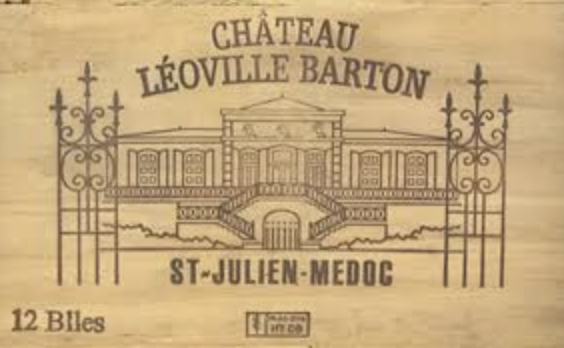
1982 Chateau Leoville Barton
The 1982 Château Léoville Barton is a benchmark Saint-Julien from one of Bordeaux’s most classically styled estates. Classified as a Second Growth in 1855, Léoville Barton has been owned by the Barton family—of Irish origin—since 1826, making it one of the longest continuously family-run properties in the Médoc. The 1982 vintage, celebrated as one of the greatest of the 20th century thanks to a warm, dry growing season that produced exceptionally ripe and generous wines, allowed the estate’s Cabernet Sauvignon-dominant blend (typically around 70–75% Cabernet Sauvignon, 20–25% Merlot, with small amounts of Cabernet Franc and Petit Verdot) to shine with remarkable depth and longevity. Aged traditionally in French oak barrels (about 50–60% new), the wine is renowned for its powerful structure, cassis, cedar, graphite, and cigar box notes, wrapped in velvety tannins that have enabled it to age gracefully for decades. Notably, the 1982 Léoville Barton earned a perfect 100-point score from Robert Parker, cementing its legendary status, and it remains a favorite among collectors for offering First Growth quality at a comparatively approachable price. Interestingly, despite its prestige, the estate itself is famously understated—there is no grand château on the property—reflecting the Barton family’s long-held philosophy that excellence lies in the wine rather than the façade.
- $349.99
- $175.00
1982 Chateau Leoville Barton
The 1982 Château Léoville Barton is a benchmark Saint-Julien from one of Bordeaux’s most classically styled estates. Classified as a Second Growth in 1855, Léoville Barton has been owned by the Barton family—of Irish origin—since 1826, making it one of the longest continuously family-run properties in the Médoc. The 1982 vintage, celebrated as one of the greatest of the 20th century thanks to a warm, dry growing season that produced exceptionally ripe and generous wines, allowed the estate’s Cabernet Sauvignon-dominant blend (typically around 70–75% Cabernet Sauvignon, 20–25% Merlot, with small amounts of Cabernet Franc and Petit Verdot) to shine with remarkable depth and longevity. Aged traditionally in French oak barrels (about 50–60% new), the wine is renowned for its powerful structure, cassis, cedar, graphite, and cigar box notes, wrapped in velvety tannins that have enabled it to age gracefully for decades. Notably, the 1982 Léoville Barton earned a perfect 100-point score from Robert Parker, cementing its legendary status, and it remains a favorite among collectors for offering First Growth quality at a comparatively approachable price. Interestingly, despite its prestige, the estate itself is famously understated—there is no grand château on the property—reflecting the Barton family’s long-held philosophy that excellence lies in the wine rather than the façade.
$349.99
- 750 ML
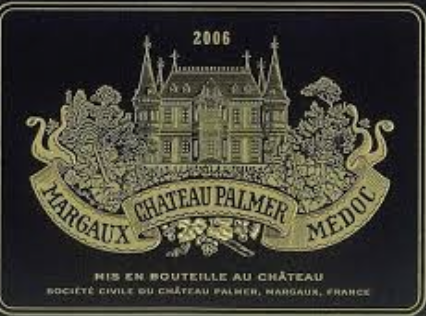
2006 Chateau Palmer
Nestled in the heart of the Margaux appellation, Château Palmer is easily the closest rival to its first growth neighbor Chateau Margaux. If a reclassification were ever on the cards, Château Palmer would undoubtedly be up for a big promotion. The estate dates to the 17th century, though it was not until 1814 that Englishman Charles Palmer took ownership and gave it his name. In 1938, the estate was bought by four Bordeaux négociant families, two of whom – Sichel and Mähler-Besse – still own the property today. Guiding Château Palmer into a new era of excellence is the dynamic and talented winemaker Thomas Duroux. With an impressive winemaking background which includes the Super Tuscan legend Ornellaia, and Château Léoville Las Cases. Château Palmer has achieved a devoted, cult-like following, by exhibiting the same elegance, restraint and complexity of the exalted First Growths while sitting at the very top of the Super- Second tree, eyeing its rightful spot amongst the elite wines of Bordeaux. Total dedication to quality, and winemaking artistry of the highest level propels Chateau Palmer to the very pinnacle of its classification, and provides Bordeaux aficionados with a unique opportunity to revel in a wine of First Growth standard, at a much more reasonable price point. Chateau Palmer is THE smart buy in Bordeaux.
- $299.99
- $215.00
2006 Chateau Palmer
Nestled in the heart of the Margaux appellation, Château Palmer is easily the closest rival to its first growth neighbor Chateau Margaux. If a reclassification were ever on the cards, Château Palmer would undoubtedly be up for a big promotion. The estate dates to the 17th century, though it was not until 1814 that Englishman Charles Palmer took ownership and gave it his name. In 1938, the estate was bought by four Bordeaux négociant families, two of whom – Sichel and Mähler-Besse – still own the property today. Guiding Château Palmer into a new era of excellence is the dynamic and talented winemaker Thomas Duroux. With an impressive winemaking background which includes the Super Tuscan legend Ornellaia, and Château Léoville Las Cases. Château Palmer has achieved a devoted, cult-like following, by exhibiting the same elegance, restraint and complexity of the exalted First Growths while sitting at the very top of the Super- Second tree, eyeing its rightful spot amongst the elite wines of Bordeaux. Total dedication to quality, and winemaking artistry of the highest level propels Chateau Palmer to the very pinnacle of its classification, and provides Bordeaux aficionados with a unique opportunity to revel in a wine of First Growth standard, at a much more reasonable price point. Chateau Palmer is THE smart buy in Bordeaux.
$299.99
- 750 ML
1986 Chateau Beychevelle
The 1986 Château Beychevelle hails from the prestigious Saint-Julien appellation on Bordeaux’s Left Bank, where this Fourth Growth (Cru Classé) estate has been famed for centuries for producing wines that combine both structure and elegance; Beychevelle’s gravelly soils, Cabernet Sauvignon-led plantings, and careful winemaking reflect classic Médoc style. In the context of the 1986 vintage—warm and generally favorable for ripeness—the Beychevelle showed very well, with its aggregate quality reflected in high aggregated ratings such as a 95 score on Tastingbook (an algorithm combining multiple professional reviews and assessments) and similarly strong individual appraisals from critics highlighting its complexity and balance.
- $249.99
- $95.41
1986 Chateau Beychevelle
The 1986 Château Beychevelle hails from the prestigious Saint-Julien appellation on Bordeaux’s Left Bank, where this Fourth Growth (Cru Classé) estate has been famed for centuries for producing wines that combine both structure and elegance; Beychevelle’s gravelly soils, Cabernet Sauvignon-led plantings, and careful winemaking reflect classic Médoc style. In the context of the 1986 vintage—warm and generally favorable for ripeness—the Beychevelle showed very well, with its aggregate quality reflected in high aggregated ratings such as a 95 score on Tastingbook (an algorithm combining multiple professional reviews and assessments) and similarly strong individual appraisals from critics highlighting its complexity and balance.
$249.99
- 750 ML
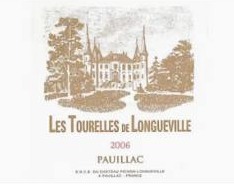
2009 Chateau Pichon Les Tourelles de Longueville Baron
The Les Tourelles de Longueville 2009 comes from Château Pichon-Longueville Baron, the famed Second Growth (Deuxième Cru Classé) estate in Pauillac on Bordeaux’s Left Bank, a property with a storied history dating back to the 17th-18th centuries and named for the distinctive turrets (“tourelles”) that adorn the château; the second wine embodies the elegance and structure of the grand vin while offering earlier accessibility and charm. The 2009 vintage in Bordeaux was exceptional, allowing this Merlot-dominated blend (roughly 61 % Merlot, 25 % Cabernet Sauvignon, 14 % Cabernet Franc) to achieve full phenolic ripeness and plenty of expressive fruit, with careful sorting and vinification reflecting the estate’s commitment to quality. While most published professional scores for this second wine are in the low 90s, James Suckling rated it as high as 93 points (noted for polished tannins, balance, and a long finish), and other sources give around 90–92, making it one of the stronger Les Tourelles efforts of the era.
- $89.99
- $45.00
2009 Chateau Pichon Les Tourelles de Longueville Baron
The Les Tourelles de Longueville 2009 comes from Château Pichon-Longueville Baron, the famed Second Growth (Deuxième Cru Classé) estate in Pauillac on Bordeaux’s Left Bank, a property with a storied history dating back to the 17th-18th centuries and named for the distinctive turrets (“tourelles”) that adorn the château; the second wine embodies the elegance and structure of the grand vin while offering earlier accessibility and charm. The 2009 vintage in Bordeaux was exceptional, allowing this Merlot-dominated blend (roughly 61 % Merlot, 25 % Cabernet Sauvignon, 14 % Cabernet Franc) to achieve full phenolic ripeness and plenty of expressive fruit, with careful sorting and vinification reflecting the estate’s commitment to quality. While most published professional scores for this second wine are in the low 90s, James Suckling rated it as high as 93 points (noted for polished tannins, balance, and a long finish), and other sources give around 90–92, making it one of the stronger Les Tourelles efforts of the era.
$89.99
- 750 ML